It holds its shape
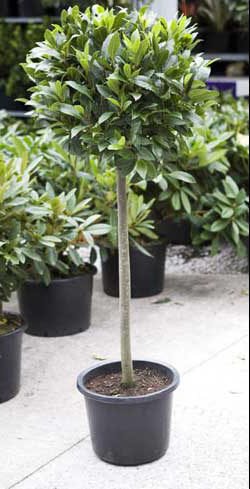
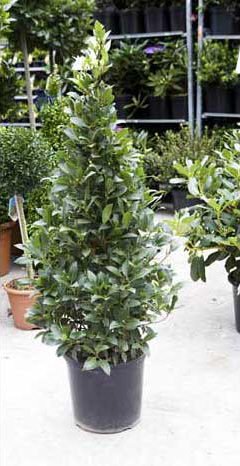
Bay grows slowly and takes clipping well, so a ball, a cone or a spiral stays looking like one between visits. Buy it already shaped and your job is keeping it there, not making it.
The clipped bay by a door is the oldest trick in formal gardening, and it still works. Evergreen, slow, happy in a pot, and it holds whatever shape you put on it for years.
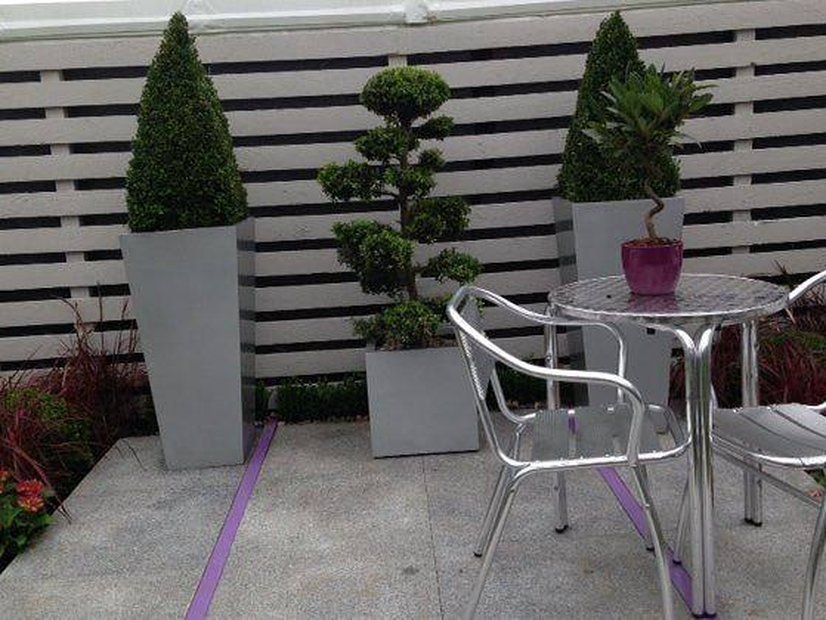
Honest expectations, before you spend a few hundred pounds on a pair of them.
Bay grows slowly and takes clipping well, so a ball, a cone or a spiral stays looking like one between visits. Buy it already shaped and your job is keeping it there, not making it.
Which is why it ends up either side of a front door, on a terrace or flanking steps. It does want feeding and watering for the privilege: a pot runs out of both long before open ground does.
Bay is hardy in most of the UK, but a potted one in an exposed spot will brown off in a hard winter. Shelter matters more than anything else you can do for it.
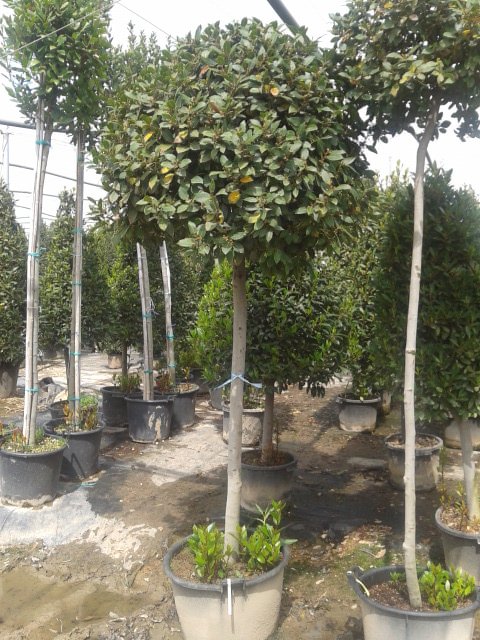
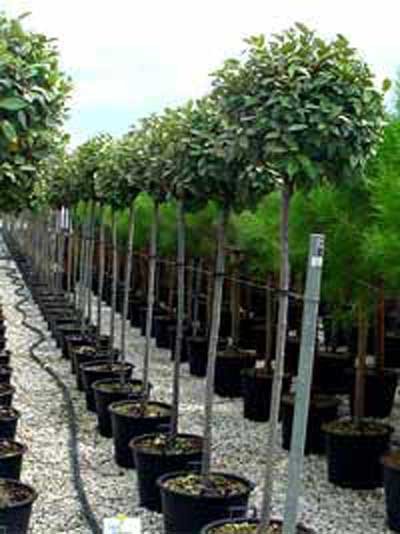
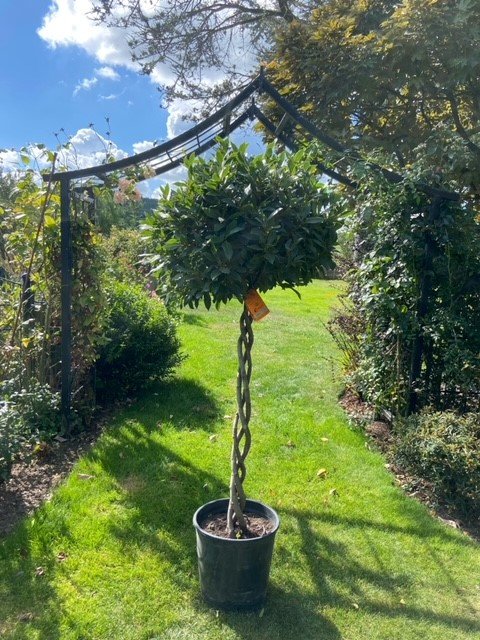
Standards and half standards go either side of a door, a gate or a run of steps, almost always in pairs. The stem lifts the head to eye level and the shape does the work.
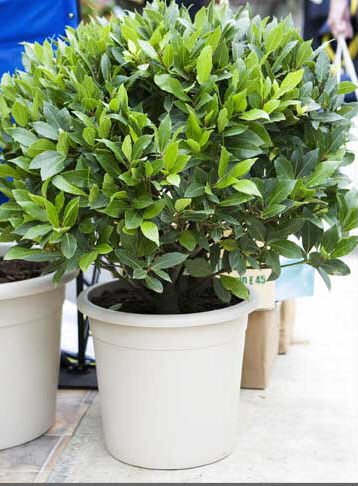
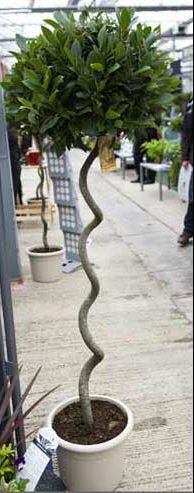
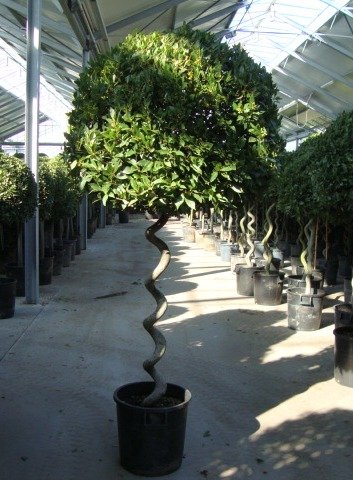
Balls and cones sit lower, in planters along a terrace or at the corners of a formal bed. Spirals, corkscrew stems and the triple-helix plants are the ones people buy when they want a single piece to be the thing you look at.
Tell us the spot, the height you want it to finish and whether it is going in a pot or the ground, and we will tell you which form actually suits it.
Clip twice a year, late spring and again in late summer, and leave it alone after that so the new growth hardens before the frosts.
Use secateurs, not shears. Bay has a big leaf, shears cut straight through it, and every sliced leaf browns along the cut. Taking whole leaves and shoots off at the stem takes longer and is the difference between a clipped bay and a scorched one.
In a pot: a loam-based compost, a pot that drains, and a feed through the growing season. Pale leaves on a potted bay usually mean it is hungry rather than ill.
Standards, half standards, balls, cones, spirals and the corkscrew and helix stems. Bay is lifted to order, so availability moves with the season. Ask and we will tell you what is ready.
In most of the country, yes. Bay is hardy down to around minus 10, but it is not bomb-proof: young plants, and any bay in a pot, feel a hard frost and a cold drying wind far more than one in the ground. A sheltered spot out of the east wind is worth more to a bay than anything else you can give it.
Bay is one of the best plants there is for a pot, which is why the clipped standard by a door is such a familiar thing. Use a loam-based compost, make sure the pot drains, and feed it through the growing season. A pot dries out and starves far quicker than open ground, and a hungry bay goes pale.
Twice a year keeps a shape tight: once in late spring once the first flush has hardened, and again in late summer. Leave it alone after that so the new growth hardens off before the frosts.
No. Bay has a big leaf and shears cut straight through it, so every sliced leaf browns along the cut and the whole plant looks burnt for weeks. Use secateurs and take whole leaves and shoots off at the stem. It takes longer and it is the difference between a clipped bay and a scorched one.
Usually cold wind, frost on a potted plant, or a pot that has dried out or run out of food. Yellowing lower leaves in a pot generally means it is hungry or sitting wet. Curled, thickened leaf edges are bay sucker, and sticky leaves with small brown bumps underneath are scale insect.
Left alone a bay will make a tree of several metres, slowly. Clipped, it stays exactly where you put it, which is the whole point of buying one already shaped. Our heights are measured honestly, and where a height is above the pot the listing says so.